

Last month, I had the honor of speaking with Dr. David Jones on his fantastic” podcast Running to Mental Health” over at runningtomentalhealh.com
During the course of our conversation he taught me a word that I had been searching for, for a very long time.
It’s a word that describes the inability to experience pleasure from those activities that one usually finds enjoyable. Sound familiar?
The word itself is derived from the Greek “AN” meaning “without”, similar to it’s use with the word “anaerobic” for without oxygen or “anesthesia” for without feeling, and the Greek word “Hedone” similar to hedonism, a term meaning pleasure.
This is ANHEDONIA, a term in psychology that Dr. Jones told me is a symptom of depression.
After the interview, I was thinking about that word and I had kind of a Charlie Brown moment.

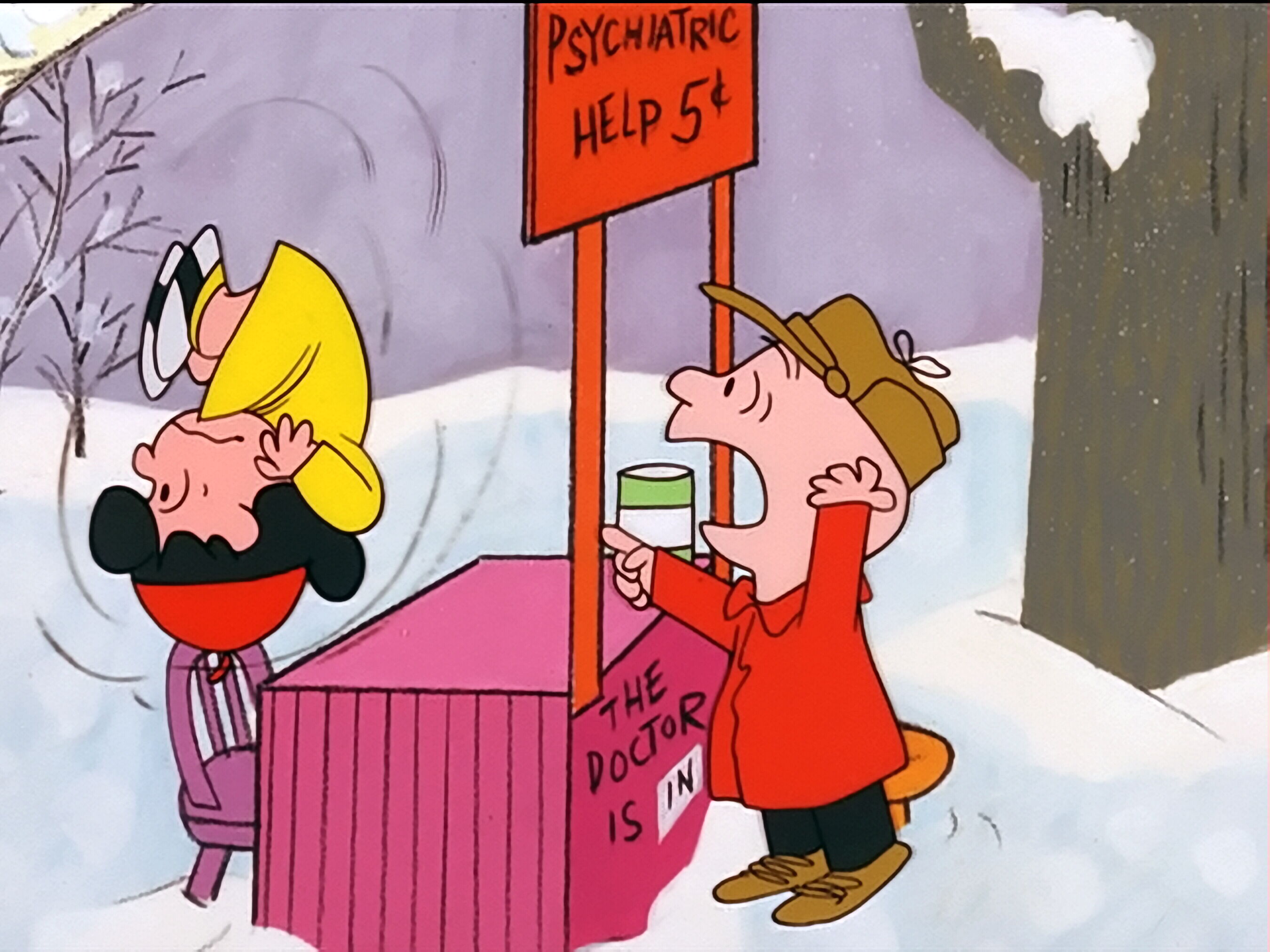
 Anhedonia!! That’s a symptom of depression that is worth digging into…and, for the purposes of this podcast, it’s worth your consideration as a runner as well….because whether or not you are one of the 350 million people world-wide who have ever, or will ever suffer from depression…for a runner, anhedonia is the worst kind of symptom…it’s a self fulfilling agony, very much the ouroboros of depression and lack of motivation.
You know what an ouroboros is, right? It’s an ancient symbol of a snake eating it’s own tail. Plato wrote about it being a self-eating, circular being representing the whole of the universe.
He wrote” Of design he created thus; his own waste providing his own food, and all that he did or suffered taking place in and by himself.”
I posit that this is a good virtual model for a runner suffering with Anhedonia: lack of pleasure from lacing up his or her shoes and, in doing so, feeding the condition that leads to a complete lack of pleasure from running. Not running begets not running.
So the question is, how do you break that cycle? How do you disengage the ouroboros?
I’m going to be honest with you up front: not only do I not know the answer to this question, but there’s just no way I’m going to resolve it for you here on Phedippidations. I am the least qualified person to address this problem, but…and here’s the point of this episode: I can certainly grab a proverbial shovel and dig in with some actual facts that might lead to a possible solution…or a dead end, but look…that hole isn’t going to dig itself.
Let’s get started.
I’ve spent some time, on this podcast and to a greater extent, in my life over the past several years: trying to unravel “the secret to happiness”. Admittedly, I didn’t get very far…mostly, I feel, because :
- I’ve a serious deficit in understanding human behavior, especially my own and
- Because I think happiness is a somewhat subjective thing to measure. It’s not like you can have 22 Happy Units in a bag that you carry with you…happiness isn’t something that can be quantified as a rate or volume. It’s etherial, you know it when you’ve got it.
There are alot of things that make me happy: my wife, my grandchildren, my puppies, baseball, sunsets, sitting by my fire pit in the back yard, a good book, and yes of course: running.
But here’s the thing, sometimes, over the course of our lives, some people can experience an inability to receive pleasure from the things they once loved.
It’s not that they love these things any less, it’s just that…sometimes, people who are suffering from depression will wake up with a feeling that’s really hard to describe: it’s kinda like “why am I bothering to even get out of bed…and why am I continuing to go through the motions?”…but, listen: they love their family, They love alot of things in their life, but their passion for many of the things that have brought them pleasure through the years can sometimes disappear.
 Imagine, for example, someone who loves wine. They may still love wine…but maybe they haven’t had a glass of wine in months. Now, there might be alot of good reasons for that: maybe they’ve cut way back on their alcohol consumption because it’s not a healthy choice of beverage to consume night after night when battling depression…not to mention the empty calories and possible liver damage. So maybe this is a good thing, right? Except: that what if this so called “wine geek” never really drank alot of wine, but instead found pleasure from tasting, studying and maintaining a verbose record of his tasting notes…an activity that brought him more pleasure than inebriation. He may not be a sommelier or anything close to an expert, but maybe he had a passion for wine and, it made him happy to go to tastings and try out new vintages.
And what if, one day, that passion and motivation to learn about and experience wine, just went away.
What if the effort of driving out to a winery and meeting with the vintners and talking with them about blending and the harvest, just seemed pointless. What if this someone went from being a passionate wine geek to someone who would just as well drink a glass of white zinfandel, in a plastic cup…with ice cubes…and a straw. The joy would have been sucked out of it for him.
How does that happen to someone? It makes no sense…or, at least it makes no sense to this electrical engineering student who flunked out of “Introduction to Psychology” back in the mid 1980’s.
Consider Motivational Anhedonia…a lack of desire to engage in activities that once grabbed you by the friggin skull and forced you, against all logic and sense, to push yourself past your comfort zone into a land of unconditional bliss!!
Passion, drive, joyful agony, indomitable spirit, music, literature, art, motion, love, joy, sex, wine, food, friendship, nature, beauty desire, lust, life in it’s every exhaustible form.

Anhedonia is a symptom of mood, schizoaffective, borderline personality and schizoid personality disorders. It’s associated with a"chronic feeling of emptiness."
That emptiness isn’t related to boredom, but is related to a feeling of hopelessness, isolation and pathological loneliness. Many who suffer with Anhedonia are also suffering from depression.
So, here’s where this podcast falls apart. See, usually I present a topic, I’ll cover all the different aspects of that topic and then recite for you the various solutions to the issue raised.
For example:
If the topic is about a Running injury? I’ll report on some of the Physical therapies to overcome it.
Low endurance? I’ll talk about the benefits of Long slow runs.
Weight gain? I’ll rattle off the details of some Reasonable diets.
Anhedonia? I have no friggin’ idea. Psychology was never one of my “strong subjects”.
Fortunately, scientists who understand a little about how the brain works have an idea.
The brain is complex…how complex? VERY. At just over 3 pounds, this wet, slimy, grey on the outside and whitish pink on the inside spongy mass of flesh is the most complex machine in the known universe.
Your brain controls every single thing you will ever do, from every thought you’ll ever have to every breath you’ll ever take. The adult brain has 86 billion neurons: or brain cells, and every neuron has between 1 to 10 thousand synapses or pathways, that result in 125 trillion pathways in our cerebral cortex alone. That’s at least 1,000 times more stars than there are in our own Milky Way Galaxy. Each pathway contains about 1000 molecular sized switches yielding 125,000 trillion switches in a single human brain.
That’s the machine we’re dealing with here.
Now, some of those synapses, or pathways are known as “pleasure pathways”. In the brain, there are a few areas that have been identified as reward and motivation centers where these pathways lead: they are (1) the nucleus accumbens, which is deep inside the primitive parts of our brains, and (2) the prefrontal cortex, which is a thin out layer of the brain just behind the forehead.
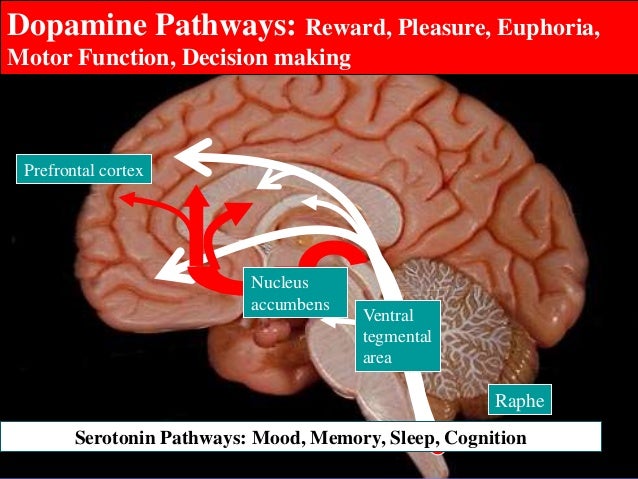
Scientists believe that nerve impulses travel towards both areas of the brain when signaling for reward and motivation.
So, when you experience pleasure or “good feelings” signals travel to your prefrontal cortex and at the same time go from your prefrontal cortex down to your nucleus accumbens.
Evidence suggests that, in normal brains, signals from the prefrontal cortex traveling to the nucleus accumbens may sustain an interest in a pleasurable activity.
If this is true, then maybe someone who is suffering from depression may not be receiving the correct signals in the primitive part of the brain when they’re experiencing pleasure..and then there’s a corresponding loss of interest.
A 2009 study published in the “Proceedings of the National Academy of Sciences” by Aaron Heller, the University of Wisconsin and the University of Reading titled “Reduced capacity to sustain positive emotion in major depression reflects diminished maintenance of fronto-striatal brain activation” seems to support this idea.
Here’s the abstract of the study:
“Anhedonia, the loss of pleasure or interest in previously rewarding stimuli, is a core feature of major depression. While theorists have argued that anhedonia reflects a reduced capacity to experience pleasure, evidence is mixed as to whether anhedonia is caused by a reduction in hedonic capacity.
An alternative explanation is that anhedonia is due to the inability to sustain positive affect across time. Using positive images, we used an emotion regulation task to test whether individuals with depression are unable to sustain activation in neural circuits underlying positive affect and reward.
While up-regulating positive affect, depressed individuals failed to sustain nucleus accumbens activity over time compared with controls. This decreased capacity was related to individual differences in self-reported positive affect. Connectivity analyses further implicated the fronto-striatal network in anhedonia. These findings support the hypothesis that anhedonia in depressed patients reflects the inability to sustain engagement of structures involved in positive affect and reward.”
So, they found the following five results:
- Depressed brains didn’t sustain nucleus accumbens activation in response to viewing positive images as well as normal brains did.
- The lack of sustaining activity in the nucleus accumbens was associated with reduced activity in the pre frontal cortex.
- Depressed subjects who did not sustain nucleus accumbens activity reported less positive emotional responses to pleasurable images.
- Depressed subjects who were able to sustain nucleus accumbens activity reported higher levels of positive emotion in their everyday lives and
- The deficit in sustaining nucleus accumbens activity was specific to positive emotion. In other words: happiness was hard to sustain but sadness was not.
So, how does this help us? Well…if there is a connection here to anhedonia and the pleasure pathways from for forebrain to your inner brain, scientists may be able to develop drugs or therapies that coax the pre-frontal cortex into “not giving up”, that is “reinstating it’s sustained activation of the nucleus accumbens.

I said before that Anhedonia is the worst kind of symptom for a runner, because it’s a self fulfilling agony, the literal ouroboros of depression and lack of motivation. It feeds upon itself in the sense that a runner, who has lost the motivation and passion for running, won’t; and that in itself will lead to an ever spiraling loss of motivation and pleasure.
That’s because if we identify ourselves as runners, and we lose our passion, interest and motivation to move our bodies through space and time in the activity of “running”, then we lose more than just our joy for something that once brought us pleasure, we lose…to a very real extent: our identity.
I could tell you that the antidote to anhedonia is to “just run anyway”, and I wish it really was that simple…I mean, it seems like it should be simple, right? Sign up for a couple of races, make a commitment to move and hopefully that’ll kick start the feedback loop, coaxing your pre-frontal cortex to send those signals of pleasure to your inner brain.
 Freud said that pleasure is a feedback mechanism motivating us towards recreating pleasurable experiences. But if that feedback loop is broken, then…well, what’s the friggin point?
I told you that the human brain is very complex, and a simple solution such as “just do it” isn’t going to help some of us.
Obviously, the key to overcoming this is to overcome the primary illness, which is depression. Remember, Anhedonia is a symptom of depression, it’s not an illness by itself. So, the good news is that there are alot of therapies for depression.
The other thing I want to make clear is that we’re not talking about boredom here. That’s really important. In the same way that depression is not just about sadness, anhedonia is not about boredom with something that once brought us pleasure.
Take for example, this podcast. Maybe you haven’t noticed that my heart hasn’t been fully into producing this show as of late. There are days, I have to admit, that I just have no creative juice and the idea of sitting here behind the microphone and talking…well, the joy has been wrung out of it some days. but…when I think about all the friends I’ve made over the past 10 years, all the great stories that have come out of this show and all the pleasurable experiences I’ve had with podcasting…it keeps me going…so, trust me, you’ve not heard the last of Steve Runner.
/Pōs(t)ˌskript/

The next three episodes of Phedippidations is going to be about something that I will argue is the single most important topic of the Anthropocene.
Global Climate Change.
Some of you who listen to Phedippidations might feel that the widespread stories about Global Warming is fiction…The Donald believes that the concept of global warming is a creation by and for the Chinese in order to make US manufacturing non-competitive.
He once tweeted “ice storm rolls from Texas to Tennessee - I’m in Los Angeles and it’s freezing. Global warming is a total and very expensive hoax”.
And look, he’s not alone in feeling this way. So, I want to take a very honest, factual and scientific approach to explain in very simple terms:
(A) That global climate change is real
(B) The difference between weather and climate, and why that is important to understand and
(C) Why Global Climate Change is the single most important topic of our time.
Now, if you’d prefer not to listen to that…then, quite frankly…I don’t want you to. If you came here to listen to a podcast about running then I doubt you’ll be interested in what I have to say about Global Warming. If, the reason you won’t want to listen is because you don’t believe in the truth regarding Global Warming…then, I really don’t want you to listen…because I’m not going to change your mind and I don’t want to hear whatever ridiculous theory you have about why the overwhelming majority of climate scientists know that the Earths global temperature is increasing…quite honestly, I don’t want to sound like an elitist here: but you’re not qualified to listen if you’re a climate change denier.
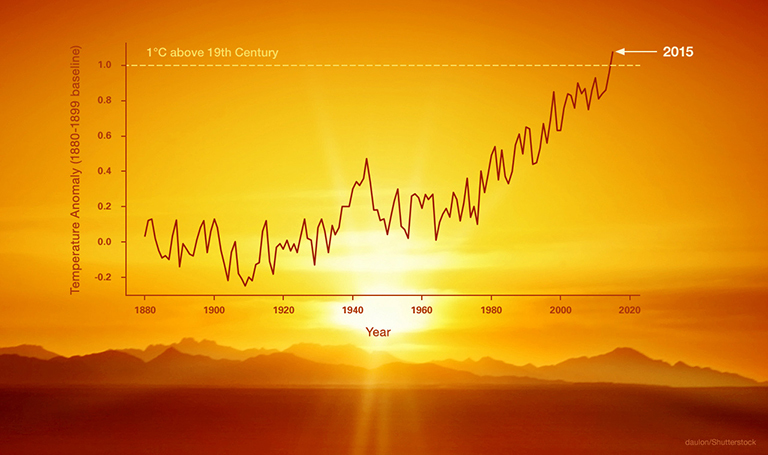 So, who do I want to listen? I want those of you who are open minded enough to face the truth about the most dangerous, damaging ruin of our planet that will hurt our grandchildren for the duration of their lives….and to let you know that it’s not too late to stop the pain. I want to make it simple, to load you up with easy facts that you can use when you get into a discussion with a Climate Change denier…because it’s really not that hard and I believe that most open minded people who can’t believe that mankind could possibly cause the mean temperature of a planet to increase will consider reasonable facts.
We’re past the point of scaring anyone…there’s no longer any point to being alarmists here: facts are FACTS:
- The sky is blue due to Rayleigh scattering,
- The sun shines due to nuclear fusion, and
- The Earths average global temperature has increased by 1.4 degrees Fahrenheit, or .8 celsius, since 1880.
These statements are all equally true and not open for discussion or argument between intellectually honest human beings.
But, sometimes you have to rub the doubters noses in the piles of proof.
That’s what I’m going to do over the next few months, here on Phedippidations.