

I think the best way to approach this is to first, get the idea of extraterrestrial intelligence out of the way.
And before we can talk about aliens at all (I’m not talking about the ones that haunt Donny Drumpfs dreams), we have to define the term. That probably seems like a waste of precious podcasting time to you, but it’s important. In science, (and that’s the practice we’ll be focusing on today: science), you have to define all of your variables and units before you can intelligently discuss any physical process, property or parameter.
So: what are we talking about when we use the word “Alien” with respect to life in the universe?
Extra-terrestrial life. But, now wait a minute: that makes it more complicated doesn’t it, because now we have to define exactly what we mean by “life”, right?
Let’s turn to that great Googly Quasi accurate encyclopedia in the cloud: Wikipedia, for a definition:
“Life is a characteristic distinguishing physical entities having biological processes, such as signaling and self-sustaining processes, from those that do not, either because such functions have ceased, or because they never had such functions and are classified as inanimate.
Various forms of life exist such as plants, animals, fungi, protists, archaea, and bacteria.


The criteria can at times be ambiguous and may or may not define viruses, viroids or potential artificial life as living.”
Let’s go with that. And to my way of thinking, we really do have to include viruses, viroids and artificial life in our discussion. I understand that viruses and viroids lack the ability to reproduce without the aid of a host cell, and don’t use cell-division when they do replicate, and that artificial life is controversial because we’re not talking about “life-as-we-know-it” but“life-as-it-might-be”.
But, just so we’re clear: I’m going to consider these three life.
And while I’m defining the parameters of our discussion, we’re going to have to spend some time, up front, right now, with Dr. Frank Drake’s Equation. Stick with me here, it’s not that complicated, I’m not going to get all “complex variables and differential equations” on you.
Written in 1961, The Drake equation is kind of a conjectural way to estimate the number of active, extraterrestrial civilizations in our Galaxy who have the ability to communicate. Keep in mind please that prior to my writing the script for this podcast, scientists estimated that there were two hundred billion galaxies in the observable universe…that number has changed as I’ll explain later…so as we go through consider the likelihood that science has taught us one thing over and over again, despite the insistence of magical thinking: that is WE ARE NOT SPECIAL. I’ll talk about that more later, but I’m asking you to don your humility hats for now, and let’s see where Drake takes us.
The Drake equation is
N equals R times F sub p times n sub e times f sub l times f sub i times f sub c times L.

the average rate of star formation in our galaxy times
the fraction of formed stars that have planets times
the average number of planets per star that can potentially support life times
the fraction of those planets that actually develop life times
the fraction of planets bearing life on which intelligent, civilized life, has developed times
the fraction of these civilizations that have developed communications (i.e., technologies that release detectable signs into space) times
the length of time, over which such civilizations release detectable signals.
equals the active, extraterrestrial civilizations in our Galaxy who have the ability to communicate.
Okay, so now we have definitions and a formula so we can start talking logically about this…but before we do that, I want to crush a certain idea that has crept into the paranoid psyche of far too many gullible conspiracy theorists out there…and that is this:
Aliens do not, and have never visited the planet earth. Period.
“But how can you be so sure Steve? The Earth is 4.5 billion years old, are you saying that in all that time the Earth has never been visited by aliens?”
No, that’s not what I’m saying…there may be some validity to the Panspermia theory for the origin of life on Earth…what I’m saying is that NO intelligent space aliens have ever visited our planet, and will never visit our planet over the next 5 billion years…and if you still believe that this is possible you have no idea, zero concept on the size or dimension of the observable universe or the properties of black holes and the multiverse.
You may THINK you know what that’s all about, but if you really think that aliens are, have ever or
will ever land their space craft on the Earth…well, the overwhelming evidence and the physical nature of the universe disagrees with you. completely.
will ever land their space craft on the Earth…well, the overwhelming evidence and the physical nature of the universe disagrees with you. completely.
And why is that, you ask? Two really solid reasons: Space and Time.
Before I ease your concerns about an extraterrestrial alien invasion, we need to consider The Fermi Paradox.
Born in 1901, Enrico Fermi was an Italian physicist who created the worlds first nuclear reactor. He’s known as the “Architect of the Nuclear Age”.

They began talking about so called “flying saucers” and a recent cartoon published in the New Yorker showing a saucer like spacecraft in the background and little green men carrying trashcans. Fermi pointed out that this theory that flying saucers were, in fact, old trash can lids was reasonable, because it accounted for two separate phenomena: the reports of flying saucers as well as the disappearance of the trash cans.
This led to a discussion as to whether the flying saucers could somehow exceed the
speed of light followed by a series of calculations on the probability of earthlike planets, the probability of life given an earth like planet exists, the probability of humans given life on such a planet, the likely rise and duration of high technology, and so on.
This led Fermi to ask the following famous question: “Where is everybody?”
This is the Fermi Paradox. If the calculations presented were correct, then we ought to have been visited long ago and many times over.
Fermi concluded that the reason we hadn’t been visited might be that interstellar flight is impossible, or, if it is possible, always judged to be not worth the effort, or technological civilizations never last long enough for it to happen.
Consider the long list of hypothetical explanations for the Fermi Paradox:
- Extraterrestrial life is rare or non-existent
- No other intelligent species have arisen
- Intelligent alien species lack advanced technology
- It is the nature of intelligent life to destroy itself
- It is the nature of intelligent life to destroy others
- Periodic extinction by natural events
- Inflation hypothesis and the youngness argument
- Intelligent civilizations are too far apart in space or time
- It is too expensive to spread physically throughout the galaxy
- Human beings have not existed long enough
- Humans are not listening properly
- Civilizations broadcast detectable radio signals only for a brief period of time
- They tend to isolate themselves
- They are too alien
- Everyone is listening, no one is transmitting
- Earth is deliberately not contacted
- Earth is purposely isolated (planetarium hypothesis)
- It is dangerous to communicate
- They are here undetected
- They are here unacknowledged

I am a huge fan of the television show “The X-Files” and understand the plight of the character Special Agent Fox Mulder and his credo “I want to believe”. But science doesn’t care what you believe in or not. Science is all about observing, considering and interpreting the available evidence…and the evidence for extraterrestrial intelligence ever having visited the earth, just doesn’t exist: sorry Scientology.
I said before that the inarguable fact that extraterrestrial intelligent beings have never visited the earth in the 5.4 billion year history of our planet is because of Space and Time, and there are several theories for what is meant by that.
The first is something called “The Great Filter”, and it basically goes like this…
Maybe the universe is teaming with life, but it hardly ever advances beyond a certain stage of development. Maybe their planet is suffering from an increase in greenhouse gases causing the mean world temperature to rise significantly over the past 200 of their years…oh, wait…that’s us! But it’s not a wacky concept to think that mass extinction due to global warming might cause a civilization to stop evolving into a space faring race. There are alot of things that could filter out space faring intelligent beings: geothermal cataclysms, celestial impacts, star death, gamma ray bursts, nuclear or biological warfare.
But back to space and time. Maybe intelligent space faring aliens do exist, and they’ve found us…but they can’t get here very quickly.
 Space is big. How big? Wicked Big. Think of the biggest thing you can possibly think of. (ha ha ha) I’m laughing, because that’s not big. Compared to space, that thing you just thought of isn’t even measurable compared to the vastness of the universe. Our tiny brains can’t comprehend how big the universe is, that’s okay…just understand that it’s bigger than big.
Radio waves, generated by our technology have been traveling outward across the universe for only a couple of hundred light years. It will take another 120,000 years before those signals have reached all of the stars in our own Milky Way galaxy alone…so, unless they’re out there, living very close to us…and by close, let’s say anywhere within a couple of hundred light years or, one quadrillion, 175 trillion, 108 billion, 249 million, 682 thousand miles from Earth…unless they’re out there within that distance; there’s very little reason at all, for them to visit us.
Faster than light travel looks easy on both Star Trek and Wars, but…it’s kind of a show stopper when it comes to physics…and even if they, the aliens, had faster than light travel…and that’s a big friggin IF, all caps…boldface and underlined in 120,000 point Arial Rounded MT Bold font..IF they could travel faster than light, it would still take them hundreds of years to get here…and if there technological advancement is anything like ours: it’s not going to happen.
Okay, so let’s put the talk of intelligent life in the universe aside…and just dial the discussion down to “life”, which is in and of itself a pretty amazing thing.
As far as we’ve been able to detect, the only existence of life in the Universe is on our little blue bubble in space: the Earth. We have no evidence for life anywhere else besides our planet.
We do have evidence for the possible conditions that could sustain life across the universe however: There’s flowing liquid water on Mars, salty oceans under 10 miles of ice on Europa, polycyclic aromatic hydrocarbons observed in Nebula NGC 7023, geysers of frozen water on Enceladus, prebiotic compounds, hydrocarbon rain and liquid lakes of ethane and methane on Titan, possible floating microbes in the atmospheric surfer dioxide and Carbon monoxide atmosphere of Venus, and briny liquid oceans 60 miles under the rocks of Callisto and Ganymede.
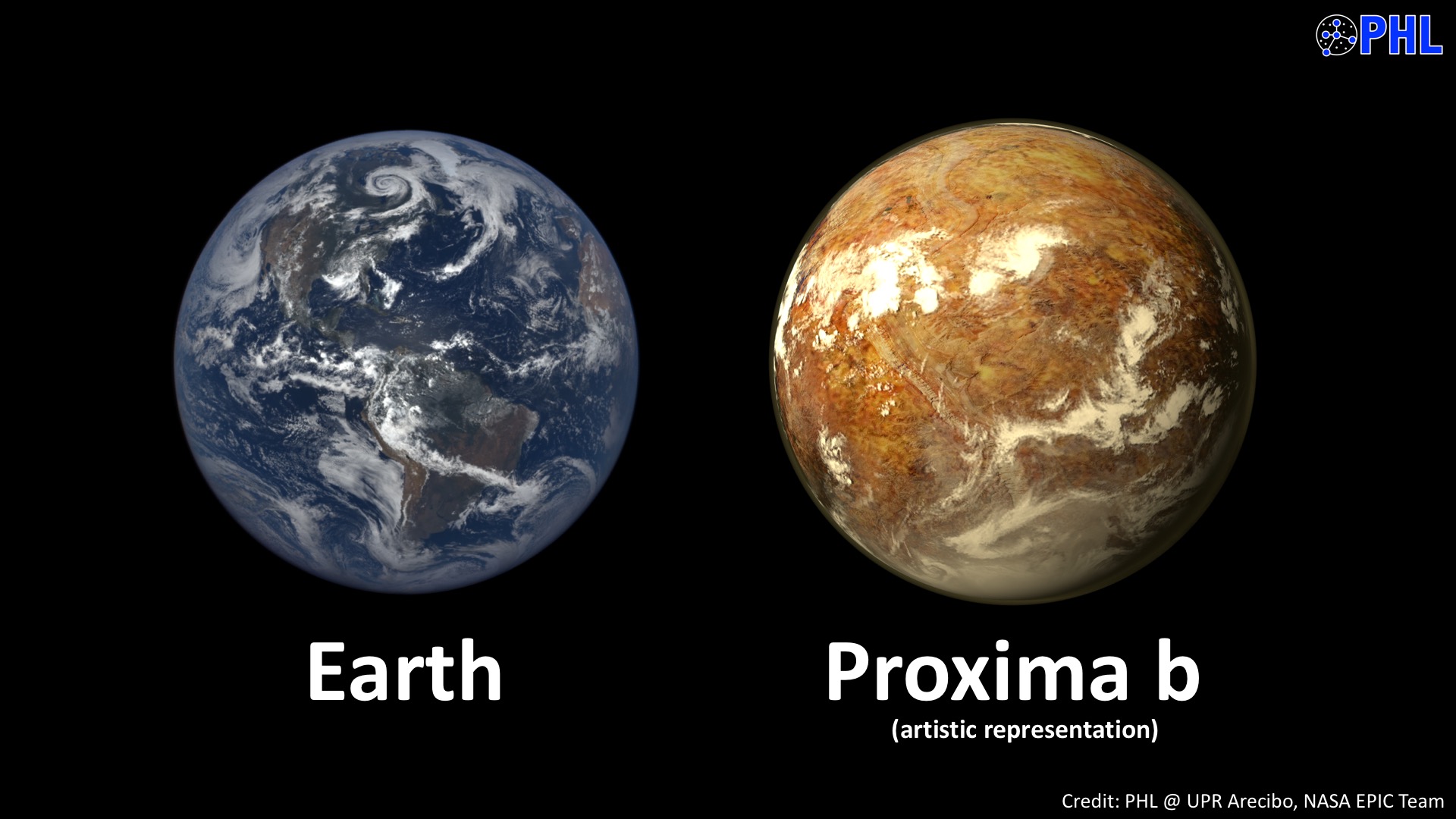
Then there are the exo-planets….planets the orbit other stars in our Galaxy. So far, astronomers have confirmed detections of 3,313 exoplanets with a total of 262 planets residing within the so called “habitable zone” where the conditions could exist for life.
Of these, 8 confirmed exoplanets which are more likely to have a rocky composition and maintain surface liquid water and could have some of the requirements for sustaining some kind of life have been discovered.
They are, listed in order of furthest distance from Earth:
Kepler-442b, 1,292 light years away
Kepler-62f, 1,200 light years away
Kepler-1229b, 769 light years away
Gilese 667 Cc, 24 light years away
Wolf 1061c, 14 light years away
and
Proxima Centauri b, 4 light years away
And that brings us to the story of OSIRIS-Rex, a space craft that literally has my name on it. I am a proud member of the Planetary Society, as you’d expect, … Founded in 1980 by Carl Sagan, The Planetary Society is an organization dedicated to Empowering the world's citizens to advance space science and exploration.
My name resides on a device placed within the sample return capsule for a round trip journey from Earth, to the asteroid Bennu and back, as well as to a second device affixed to the spacecraft instrument deck for continued travels in space.
The name OSIRIS-REx is an acronym for the spacecraft's mission objectives: Origins, Spectral Interpretation, Resource Identification and Security-Regolith Explorer.
It’s also the name of the Egyptian god Osiris: the green skinned god of the afterlife, the underworld, and the dead, but more appropriately as the god of transition, resurrection, and regeneration.
So, what’s the big deal about OSIRIS-REx and what does it have to do with Life in the Universe?
Everything: The purpose of the OSIRIS-REx mission is to gently touch the surface of an asteroid, literally grab a fistful of it's surface and bring it back to Earth for analysis.
From the mission website over at http://www.asteroidmission.org

Where did we come from?
What is our destiny?
Asteroids, the leftover debris from the solar system formation process, can answer these questions and teach us about the history of the sun and planets.
The OSIRIS-REx spacecraft is on it’s way to a carbonaceous asteroid whose regolith may record the earliest history of our solar system. It’s called “Bennu"
Bennu may have the molecular precursors to the origin of life including water, organics and precious metals.
It’s also one of the most hazardous asteroids to Earth, with a relatively high probability of impacting our planet in the late 2100’s, this is in the next few hundred years.
OSIRIS-REx’s key science objectives include:
Return and analyze a sample of Bennu’s surface
Map the asteroid
Document the sample site
Measure the orbit deviation caused by non-gravitational forces (the Yarkovsky effect)
Compare observations at the asteroid to ground-based observations
OSIRIS-REx successfully launched from Cape Canaveral Air Force Station in Florida on Sept. 8, 2016. It’s now in its Outbound Cruise phase, which will last until early fall 2018.
Are we alone? It’s a big question for a big universe. This week data from the Hubble and many other telescopes around our world employed a new mathematical model which provides us with a new estimate about the number of galaxies in the universe. Until a few weeks ago, the answer to the question: How many galaxies are in the universe was found to be 200 billion…but now, we have a more accurate number: two trillion. That’s a 2 followed by 12 zeros.
So, what do you think? Are we alone? Well…if you think we’re special and that some Flying Spaghetti Monster waved his noodely appendage and created the universe in just under 10,000 years…the kindest thing I can say to you is, your math is way off.
It’s painful to know we are not special in the universe. It sucks to consider that the earth is not at the
 center of it all and that the world isn’t flat and that life must exist out there, on other worlds…but we don’t have evidence for that yet.

What we DO have evidence for, is the fact that this little blue bubble in space that we, and every terrestrial born creature has ever known was born upon, is ALL THAT WE’VE GOT…and when we humans, the so called “higher species” destroys our planets environment and purposefully increases the average global mean temperature…as we most definitely have…then the question isn’t are we alone. The question is, how long do we have left?
Just a few weeks ago the world renown Physicist and Advanced Fellow of particle physics in the School of Physics and Astronomy at the University of Manchester: Brian Cox, in an interview with the Sunday Times, weighed in one of astronomy's most curious questions: Given the high probability of extraterrestrial life existing in the endlessly massive universe, why haven't we seen any clear evidence of it? Or as Fermi asked ““Where is everybody?”
Cox answered, and I quote “One solution to the Fermi paradox is that it is not possible to run a world that has the power to destroy itself and that needs global collaborative solutions to prevent that. It may be that the growth of science and engineering inevitably outstrips the development of political expertise, leading to disaster. We could be approaching that position.”
In other words, one good reason why we’ve not detected alien signals across the expanding universe is because the L in the Drake Equation, that is “the length of time, over which civilizations release detectable signals.” is less than 10,000 years…which is
just a little over the amount of time human civilizations have been peeing in the oceans and throwing rocks at each other.
So…we’ve got THAT going for us.
Most of the cost for producing Phedippidations is provided by listeners of this world, and not by the extraterrestrial visitors from the horse head nebula. If you like it and can afford it, donate a buck a month at support.SteveRunner.com.
Thank you very much: William, Vance, Scott, Gordon, Cheryl, DC, James. Margaret, Dave, Douglas, Desiree, Lou, Dennis, Robert, Andrew, Jill, Colin, Dino, Trey, and Martin.
October 10th, 2016. It’s a cool, 56 degrees Farehheight, it's half past nine and the sky is clear.
 I’m in the first base field box section 29, row D seat 4…my right arm leaning on the Boston Red Sox dugout. I guess there’s a bunch of celebrities around me, but I don’t notice or care. I'm at Fenway Park. My baseball cathedral. This is game 3 of the American League Division Series, and if my beloved Boston Red Sox do not win this game, it’ll be the last game of the 2016 season and the last major league baseball game ever, for number 34.
David Américo Ortiz Arias (born November 18, 1975), otherwise known as "Big Papi” comes to the plate
For those of you who don’t know, Big Papi is a Dominican American professional baseball player who plays for the greatest baseball team in the Universe. He is a designated hitter (DH) who occasionally plays first base. He played for the Minnesota Twins from 1997–2002 and has been with the Boston Red Sox ever since.
Papi is a ten-time All-Star, a three-time World Series champion, and holder of the Red Sox single-season record for home runs with 54, set during the 2006 season.
Ortiz has hit 541 career home runs, which ranks him tied for 18th on the MLB all-time home run list. He is the all-time leader in MLB history for runs batted in (RBIs) (1,768), and hits (2,472) by a DH.
More than just a baseball player, Big Papi has always been an incredible role model. Growing up, I thought of Carl Yastrzemski as one of my heroes, right up there with Albert Schweitzer, Bobby Kennedy, and the Apollo Astronauts.
But add to that list, Big Papi. He didn’t save the world, walk on the moon or “dream of things that never were, and ask why not” but he did make the last 14 summers of my life alot more enjoyable and exciting…and man, could he hit a ball.
In the eighth inning, Papi came to the plate. With two outs and Mookie Betts on first, the Cleveland Indians manager, and hero of

And that was the last major league at bat in the amazing career of David Ortiz. The next batter, Hanley Ramirez hit a single, moving Papi to second and bringing home Mookie who got the game to within a single run of tying it up. It’s now Cleveland 4 Boston 3 which is when we had to take Papi out, substituting him with pinch running Marco Hernandez.
David walked off the diamond to cheers from the Fenway Faithful, raising his arms willing the crowds to cheer in support.
But it was not to be, and my beloved Boston Red Sox lost that game, and their season was over.
But not our memories of the Great David Ortiz. I'll never forget him.
That's the way it is with the great ones. They bring their best to the game, they take seriously their responsibility to the fans and fellow team mates to do more that try, to give themselves fully to the moments where they can best achieve victory. They inspire us to greatness, it's a wholesome infection of good.
It turns out that baseball is both "just" a game, and so much more. For those of us who had the honor of watching Papi swing, we understand that in ways that words fail to adequately describe.
 When Papi took to the plate, the bat crooked in his right arm, pulling the velcro on each batting glove and resetting them for a tighter fit, spitting on his right palm, clapping twice then grasping the bat, poised over his shoulder with a look of intensity sans smile, facing the pitcher, piercing the guys insecure soul...all power, muscle, potential energy and magnificent focus. He wouldn't swing at anything but those pitches worthy of his mighty swing...even if those pitches brought the ball right over the plate. They'd through him inside if they dared, but they could never through at David with confidence. He got 1,319 bases on balls in his career. Papi's bat was feared.
And so now I have to face a winter without baseball. It won't be easy, it never is. The days will grow shorter, and darker, and colder...and I won't have a baseball game to listen to at night when Number 34 will come to the plate, and bring joy with a swing and crack of his bat, and the ball flying far and high over the right most edge of the green monster and a smiling, slow jogging designated hitter we call Big Papi will round the bases and point skyward to his mom.
I'm not ready for a winter without baseball. I'm never ready. How could I be?
Gracias Papi, we’ll always love you man.
I’m Steve Runner, reminding you to Run long and Taper